 gadgetrevolution71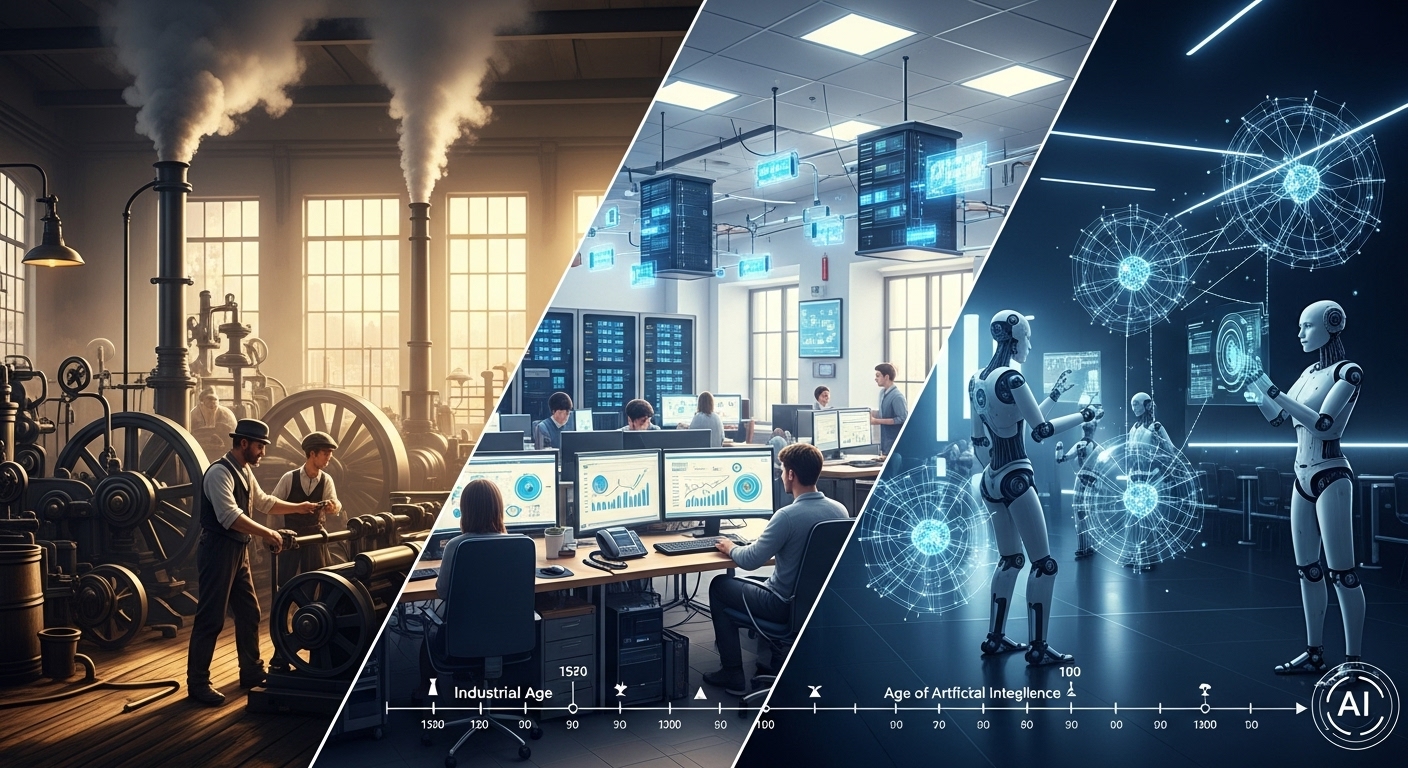
Technology has become the defining force of modern civilization. From the early days of stone tools to the age of artificial intelligence, humanity’s relationship with technology has shaped societies, economies, and even human behavior itself. Every era in history has been marked by a major technological shift that redefined how people live, work, and interact with one another. The story of technology is, in many ways, the story of humanity’s relentless pursuit of improvement and understanding.
This blog explores the journey of technology from its humble beginnings to the complex digital ecosystem that surrounds us today. It dives into key technological revolutions, the rise of computing, the power of the internet, the emergence of artificial intelligence, and the ethical dilemmas of our increasingly connected world.
The Dawn of Technology: From Stone to Steel
Human innovation began long before modern civilization took shape. The first spark of technology appeared when early humans discovered how to use tools made from stone. These primitive tools marked the beginning of what we now call the Stone Age, a period when innovation was centered on survival.
Fire, wheel, and simple weapons transformed how early humans interacted with their environment. With the invention of fire, humans could cook food, stay warm, and ward off predators. The wheel enabled transport and trade, paving the way for the first forms of civilization.
Eventually, humanity entered the Bronze Age and then the Iron Age, each marked by new materials and methods of production. Metallurgy became a cornerstone of progress, leading to stronger tools, weapons, and agricultural equipment. Technology, even then, was more than convenience—it was power. Civilizations that mastered new technologies thrived, while those that lagged behind often disappeared.
The Industrial Revolution: Machines That Changed the World
The Industrial Revolution, beginning in the late 18th century, marked one of the most dramatic transformations in human history. Steam engines, textile machinery, and mechanical tools revolutionized manufacturing. What once required days of manual labor could now be completed in hours.
Factories rose across Europe and North America, and cities expanded rapidly. People moved from farms to urban centers in search of work, fundamentally altering the social structure of the world. The rise of industries also gave birth to capitalism, economic growth, and the concept of mass production.
Key figures like James Watt, Eli Whitney, and Henry Ford pushed the boundaries of engineering and production. The steam engine powered locomotives and ships, enabling trade and communication between distant nations. The assembly line turned mass production into an art form, reducing costs and making goods accessible to the average person.
However, this era also brought new challenges. Industrial pollution, harsh working conditions, and the exploitation of labor became pressing issues. Yet, despite these problems, the Industrial Revolution laid the foundation for modern technology and innovation.
The Age of Electricity and Communication
As the 19th century gave way to the 20th, a new wave of inventions changed how humans communicated and powered their world. Electricity became the backbone of progress. Innovators such as Thomas Edison and Nikola Tesla introduced technologies that illuminated homes, powered factories, and connected nations.
The invention of the telephone by Alexander Graham Bell, the telegraph by Samuel Morse, and later the radio by Guglielmo Marconi revolutionized communication. For the first time in history, information could travel across continents in moments rather than days.
Electricity also gave birth to new forms of entertainment. The radio and later the television became household staples, connecting people to the world and shaping culture in unprecedented ways. These technologies laid the groundwork for the globalized, media-driven society that would define the later 20th century.
The Birth of Computing
The true digital age began in the mid-20th century with the invention of computers. The earliest computers, such as ENIAC and UNIVAC, were enormous machines that filled entire rooms. They were used primarily for military calculations and scientific research.
However, as transistors replaced vacuum tubes, computers became smaller, faster, and more affordable. The invention of the microprocessor in the 1970s was a turning point—it transformed computers from massive institutional machines into devices that could fit on a desk.
Pioneers like Steve Jobs, Bill Gates, and Steve Wozniak played key roles in bringing computing to the masses. The personal computer became a household item, and software applications revolutionized business operations, education, and entertainment.
Programming languages evolved, giving rise to new professions and industries. What once required teams of scientists could now be accomplished by individuals at home. This democratization of computing was a crucial step toward the connected world we live in today.
The Internet Revolution
The internet is perhaps the single most transformative technology in modern history. Originally developed as a military communication network, it evolved into a global system that connected billions of people. By the 1990s, the internet had begun to reshape economies, communication, and culture.
The World Wide Web, introduced by Tim Berners-Lee, made it possible for anyone to publish information online. This accessibility led to an explosion of creativity and collaboration. Businesses discovered new ways to reach consumers, and individuals found platforms to share their voices.
Email, online shopping, and social media redefined how humans interact. The rise of search engines made the world’s knowledge available at the click of a button. In just a few decades, the internet shifted from a luxury to an essential part of daily life.
However, the internet also introduced new challenges: privacy concerns, misinformation, cybercrime, and the digital divide between those with and without access. Despite these issues, it remains the most powerful communication tool humanity has ever built.
The Mobile Era: Technology in Your Pocket
The 21st century ushered in the era of mobility. The invention of the smartphone changed everything. What was once confined to a desktop computer could now be carried in your hand.
Mobile phones evolved rapidly—from simple calling devices to powerful mini-computers capable of photography, navigation, banking, and more. The introduction of touchscreen technology and mobile operating systems like iOS and Android created a global shift in how people used technology.
Apps became the new currency of innovation. Every major industry, from healthcare to education to entertainment, developed mobile solutions. With global internet connectivity and cloud computing, smartphones became portals to the digital world.
This era also birthed the gig economy, powered by mobile platforms like ride-sharing and delivery apps. While convenience soared, debates around labor rights, privacy, and screen addiction emerged. The mobile revolution made technology more personal than ever before.
Artificial Intelligence: The Rise of Thinking Machines
Artificial Intelligence (AI) represents the next frontier of technological progress. Once a concept limited to science fiction, AI now influences nearly every aspect of modern life. From virtual assistants and facial recognition to recommendation algorithms and autonomous vehicles, AI has become an invisible force shaping our decisions and behaviors.
Machine learning and deep learning have enabled computers to analyze massive amounts of data, identify patterns, and make predictions. This capability drives innovation in fields like healthcare, finance, logistics, and entertainment.
In healthcare, AI assists in diagnosing diseases, predicting outbreaks, and personalizing treatments. In business, it powers automation, data analysis, and customer engagement. In everyday life, AI curates what we watch, read, and buy.
Yet, the rise of AI also raises profound ethical questions. What happens when machines outperform humans in creativity or decision-making? How do we balance innovation with privacy and fairness? The challenge lies not just in what AI can do, but in ensuring it aligns with human values.
The Internet of Things: A Connected World
The Internet of Things (IoT) refers to the growing network of physical devices connected to the internet—everything from smart refrigerators to industrial sensors. These devices collect and exchange data, creating a web of interconnectivity that improves efficiency and convenience.
In homes, IoT powers smart thermostats, lighting, and appliances that learn user habits. In cities, it drives smart infrastructure—traffic management systems, waste tracking, and public safety enhancements. In industries, IoT optimizes production, reduces costs, and enhances safety.
However, this connected ecosystem also introduces vulnerabilities. Every connected device is a potential entry point for hackers, making cybersecurity more important than ever. As IoT expands, the need for robust data protection and ethical standards becomes critical.
Blockchain and the Future of Digital Trust
While often associated with cryptocurrencies, blockchain technology has far-reaching implications beyond finance. It is essentially a decentralized ledger that records transactions securely and transparently.
Blockchain’s potential lies in its ability to eliminate intermediaries and enhance trust. It can be applied in supply chains, voting systems, healthcare, and even identity verification. By decentralizing data, blockchain reduces the risk of manipulation and promotes accountability.
However, the technology is still in its developmental phase. Scalability, energy consumption, and regulatory issues remain challenges. Yet, blockchain represents a significant step toward a more transparent and secure digital world.
Automation and Robotics: Redefining Work
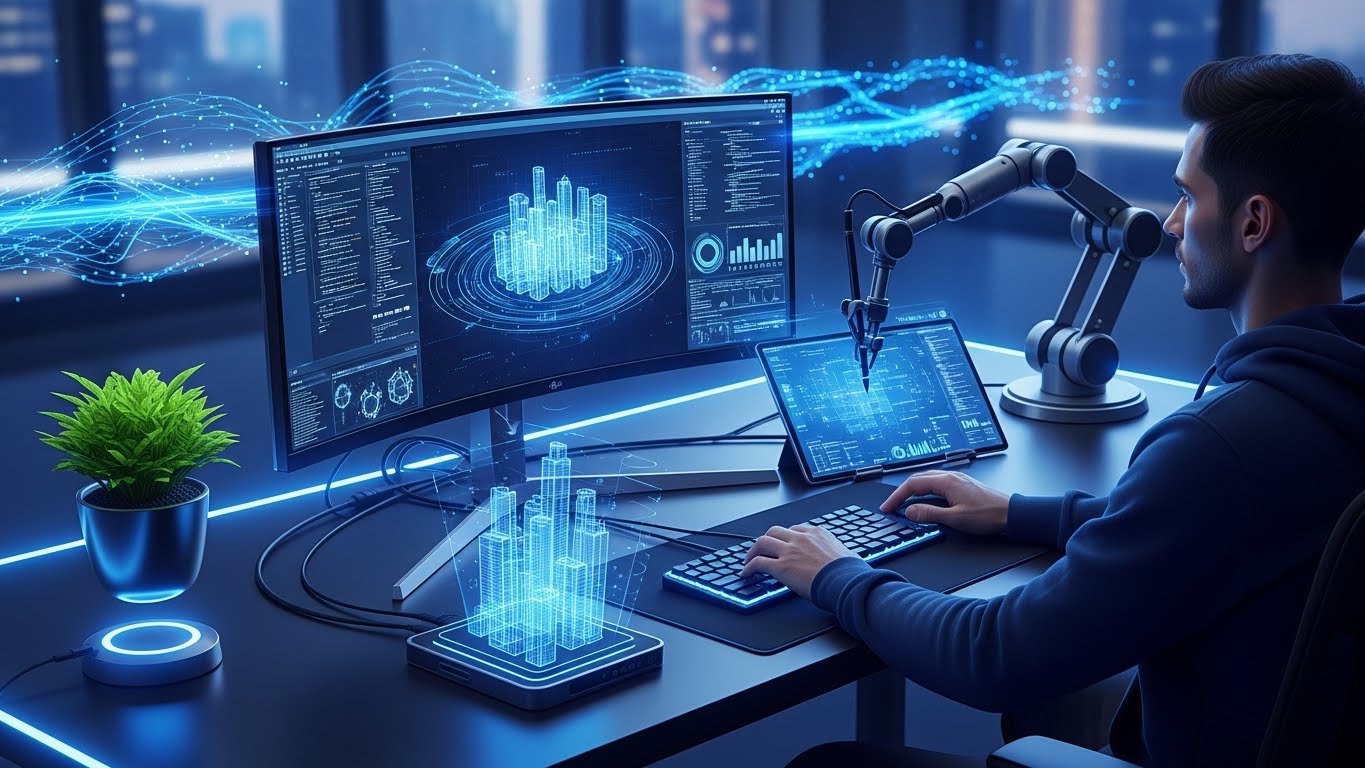
Automation has been reshaping industries for decades, but the integration of robotics and AI has accelerated this transformation. Robots now perform complex tasks in manufacturing, logistics, and even healthcare.
In factories, robotic arms assemble products with precision and speed. In warehouses, automated systems manage inventory and deliveries. In hospitals, robotic assistants aid surgeons in performing delicate procedures.
While automation enhances efficiency, it also raises concerns about employment and economic disparity. As machines replace repetitive human labor, new roles must emerge to manage, program, and oversee these systems. The future of work will likely involve collaboration between humans and intelligent machines rather than competition.
Virtual Reality and Augmented Reality: The Digital Experience Frontier
Virtual Reality (VR) and Augmented Reality (AR) represent a new dimension of human experience. VR immerses users in entirely digital environments, while AR overlays digital information onto the real world.
These technologies are revolutionizing industries from gaming and entertainment to education and healthcare. In training environments, VR allows people to practice complex procedures in a risk-free space. AR assists surgeons with real-time data during operations and enhances learning experiences in classrooms.
As hardware becomes more affordable and content creation easier, VR and AR are expected to play an even bigger role in shaping the way humans interact with information and each other.
Quantum Computing: The Next Great Leap
If traditional computers process information using bits (0s and 1s), quantum computers use quantum bits or qubits, which can exist in multiple states simultaneously. This allows them to solve problems that would take classical computers centuries to compute.
Quantum computing could revolutionize fields like medicine, cryptography, and material science. It holds the potential to break current encryption systems and create new drugs through molecular simulation.
Though still in experimental stages, progress in quantum technology promises to redefine what is computationally possible. When fully realized, it could usher in a new era of unimaginable computational power.
The Ethical and Environmental Challenges of Technology
While technology brings progress, it also creates new ethical and environmental dilemmas. The production of electronic devices consumes vast resources and generates e-waste. Data privacy has become a major concern, with corporations collecting and monetizing personal information.
Artificial intelligence, while powerful, can perpetuate bias and inequality if not designed responsibly. Automation may displace jobs faster than economies can adapt. And as our dependence on technology grows, so does our vulnerability to cyberattacks.
Ethical innovation requires balancing progress with responsibility. Sustainable production, transparent algorithms, and fair data practices must become priorities for the tech industry.
The Future of Technology: A Symbiosis of Man and Machine
Looking ahead, the line between human and machine will continue to blur. Advancements in biotechnology, brain-computer interfaces, and genetic engineering suggest that the next phase of evolution may be digital as much as biological.
Humans may one day enhance memory, strength, or intelligence through technology. Wearables and implants could monitor health in real time, while AI companions could assist in daily life. However, these innovations come with philosophical questions: what does it mean to be human in a world where machines can think, feel, or even create?
The future will not be defined solely by technology’s capabilities but by how humanity chooses to use them. Collaboration, ethics, and foresight will determine whether innovation uplifts or divides us.
Conclusion: Technology as the Mirror of Humanity
From the first stone tool to artificial intelligence, technology has always reflected human ambition, creativity, and curiosity. Each leap forward has solved old problems and created new challenges.
The evolution of technology is not just about machines—it’s about people. It’s about how we adapt, dream, and strive for better. As we move deeper into the digital age, the true measure of progress will not be the power of our devices, but the wisdom with which we wield them.
In the end, technology is the greatest mirror ever made—it shows us not only what we can create, but who we are becoming.