 gadgetrevolution71
Introduction: A Technological Revolution in the Making
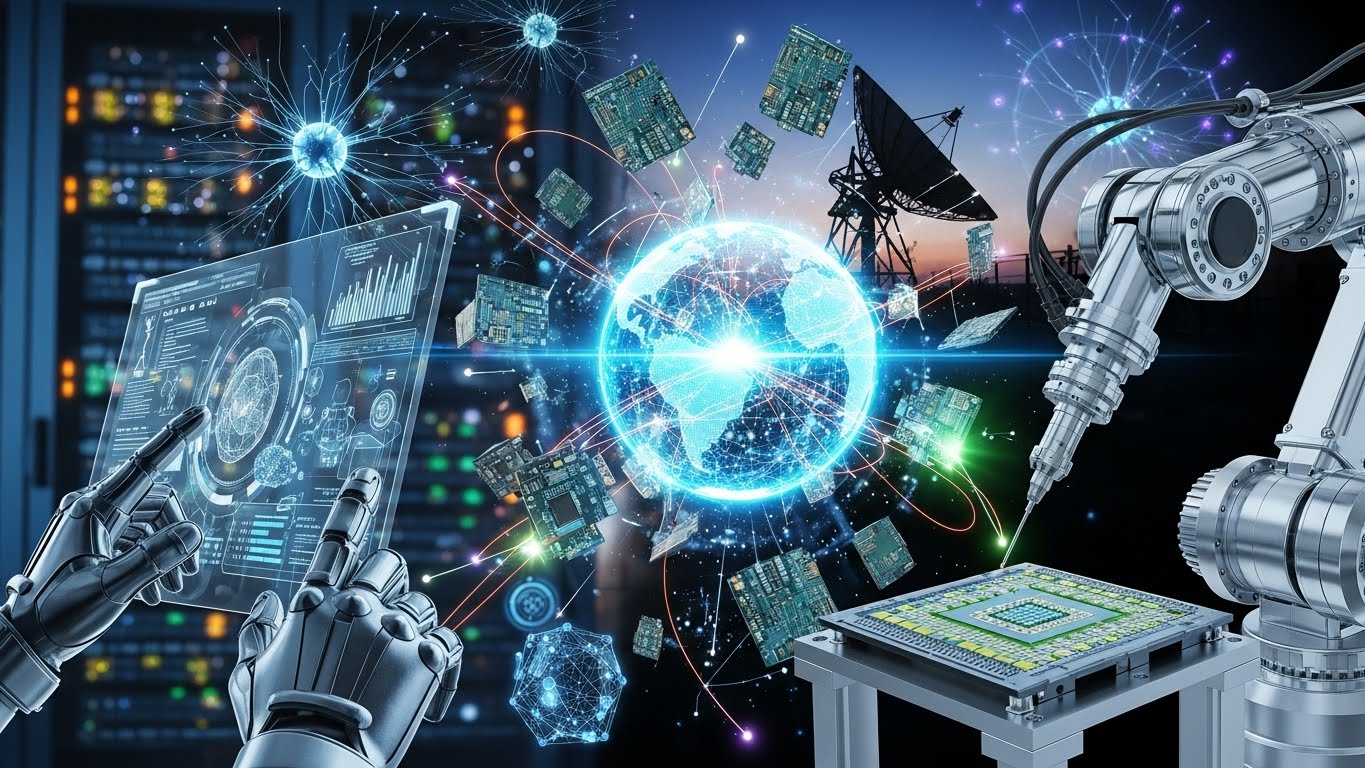
In the last few decades, the rapid pace of technological advancement has altered nearly every aspect of our daily lives. From the smartphones in our pockets to the cutting-edge AI systems driving innovation in industries, we are living in an era where technology is more deeply integrated into society than ever before. But what lies ahead? As we look to the future, it’s clear that emerging technologies will not only continue to evolve but will also radically redefine how we work, live, and interact with the world. In this blog, we’ll explore some of the most exciting developments and how they’re shaping the future.
Artificial Intelligence: The Brain Behind the Future
Artificial Intelligence (AI) is arguably one of the most influential technologies of our time. From smart assistants like Siri and Alexa to complex algorithms driving personalized experiences on platforms like Netflix and Amazon, AI is already a significant part of our lives. However, the true potential of AI extends far beyond this.
AI has the capacity to revolutionize sectors like healthcare, education, and even transportation. In healthcare, AI can analyze vast datasets to predict medical conditions, suggest treatments, and even assist in surgeries. In education, AI-powered tutoring systems can provide personalized learning experiences to students, helping them learn at their own pace. Meanwhile, autonomous vehicles powered by AI are paving the way for safer and more efficient transportation systems.
Despite these advancements, the rise of AI brings both excitement and concern. Ethical issues surrounding job displacement, privacy, and accountability in decision-making must be carefully managed as we integrate AI into more aspects of our lives.
The Power of 5G: Connecting the World Like Never Before
The rollout of 5G technology is expected to be a game-changer in how we connect to the internet. With download speeds up to 100 times faster than the current 4G networks, 5G promises a new era of seamless connectivity. But it’s not just about faster downloads and streaming—it’s about enabling innovations that were previously unimaginable.
One of the most transformative aspects of 5G is its ability to connect millions of devices simultaneously with low latency. This is crucial for the Internet of Things (IoT), where everyday devices, from home appliances to wearable tech, can communicate with each other and optimize performance in real-time. In healthcare, 5G will enable remote surgeries and telemedicine to be more effective, making healthcare more accessible to remote regions. Similarly, 5G will accelerate the growth of smart cities, where everything from traffic management to energy distribution can be optimized through connectivity.
Quantum Computing: The Next Frontier of Computing Power
Quantum computing is still in its early stages, but its potential is enormous. Unlike traditional computers, which use binary bits to process data, quantum computers use quantum bits (qubits), which can exist in multiple states simultaneously. This capability allows quantum computers to perform complex calculations at speeds that would be impossible for classical computers to match.
The implications for industries like cryptography, artificial intelligence, and drug discovery are profound. For example, quantum computers could break existing encryption methods, leading to the development of new, more secure cryptographic techniques. In medicine, quantum computing could revolutionize drug discovery by simulating complex molecular structures, speeding up the process of finding new treatments for diseases. Though quantum computing is still in its infancy, it’s a technology that will likely have a transformative impact in the coming decades.
The Rise of Virtual and Augmented Reality
Virtual reality (VR) and augmented reality (AR) are two technologies that have already made significant strides in gaming and entertainment. However, their potential stretches far beyond that. While VR creates immersive digital environments, AR overlays digital information on the real world, offering an enhanced version of our surroundings.
In the realm of education, AR is being used to create interactive learning experiences. Imagine being able to view 3D models of historical landmarks or experience the inner workings of the human body in real time. In retail, AR allows customers to try on clothes virtually or see how furniture will look in their homes before making a purchase.
For businesses, VR and AR provide new ways to train employees in a safe, controlled environment. For example, medical students can perform virtual surgeries, and construction workers can walk through buildings that haven’t been built yet. These technologies are opening up endless possibilities for innovation in virtually every industry.
Blockchain: Redefining Trust and Transparency
Blockchain technology is best known for powering cryptocurrencies like Bitcoin and Ethereum, but its potential extends far beyond digital currency. At its core, blockchain is a decentralized ledger that securely records transactions across a distributed network. This means that data can be verified without the need for intermediaries, making it tamper-proof and transparent.
Blockchain has the potential to revolutionize industries by enhancing transparency, reducing fraud, and improving efficiency. In supply chain management, blockchain can track goods from production to delivery, ensuring that all processes are transparent and accountable. In healthcare, it could streamline medical records, giving patients more control over their data while improving privacy and security.
The financial sector is also exploring blockchain for faster, cheaper cross-border transactions. As the technology matures, it could redefine how we store, manage, and transfer value, making financial systems more inclusive and efficient.
Sustainable Tech: Innovations for a Greener Future
In the face of climate change and environmental degradation, technology is playing a crucial role in developing sustainable solutions. From renewable energy sources to electric vehicles and energy-efficient buildings, sustainable tech is driving the transition to a greener, more eco-friendly future.
Solar and wind energy have become increasingly affordable and efficient, and innovations in energy storage are allowing these renewable sources to power homes and businesses even when the sun isn’t shining or the wind isn’t blowing. In the transportation sector, electric vehicles (EVs) are gradually replacing traditional gasoline-powered cars, reducing emissions and dependence on fossil fuels.
Beyond energy, sustainable technology includes innovations in agriculture, waste management, and carbon capture. Smart farming techniques are optimizing food production with minimal environmental impact, while waste-to-energy technologies are helping reduce landfill waste by converting it into usable energy.
Conclusion: Embracing the Future of Tech
The future of technology is bright, with innovations emerging in nearly every area of life. From AI and 5G to quantum computing and blockchain, the technologies of tomorrow will undoubtedly have a profound impact on how we live, work, and interact with the world. However, as we move forward, it’s essential to approach these innovations with responsibility, ensuring that they are used ethically and in ways that benefit society as a whole.
As we continue to embrace and explore new technologies, we must remain mindful of the challenges they present, including privacy concerns, job displacement, and environmental sustainability. The key to a successful future lies in balancing innovation with careful consideration of its broader implications. The journey ahead is exciting, and with each breakthrough, we’re one step closer to a more connected, efficient, and sustainable world.