 gadgetrevolution71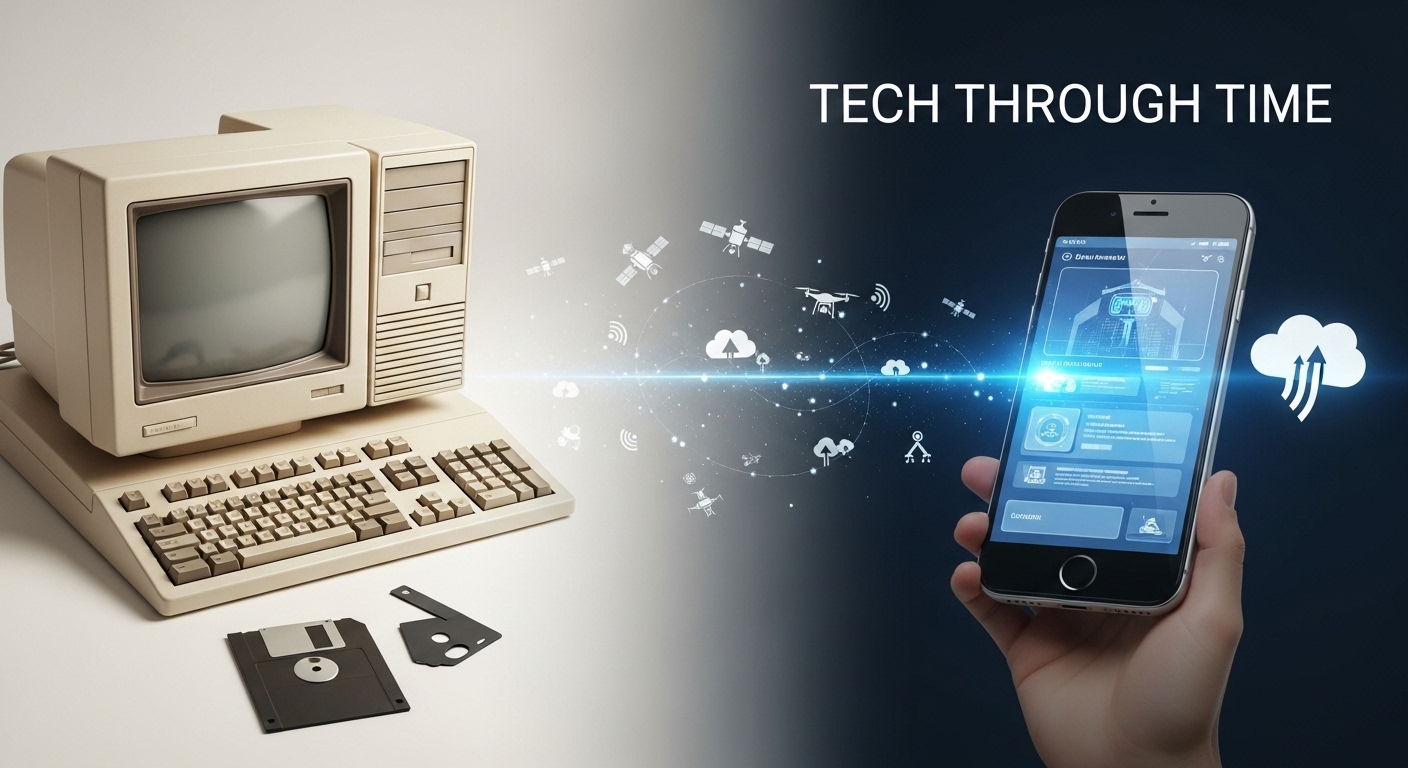
Technology has been the cornerstone of human advancement, propelling societies from simple tools to the complex digital ecosystems of today. From artificial intelligence to quantum computing, the pace of technological innovation is unprecedented. This blog explores the latest trends, breakthroughs, and their implications for industries, society, and everyday life.
The Rise of Artificial Intelligence
Artificial intelligence (AI) has transformed from a niche academic pursuit to a central driver of modern innovation. At its core, AI enables machines to perform tasks that traditionally required human intelligence, such as decision-making, problem-solving, and pattern recognition.
Machine Learning and Deep Learning
Machine learning (ML), a subset of AI, involves training algorithms to identify patterns in data and make predictions. Deep learning, a further refinement, uses neural networks to mimic the human brain’s ability to learn from vast datasets. Applications range from natural language processing in chatbots to image recognition in healthcare diagnostics.
AI in Everyday Life
AI is no longer confined to laboratories; it permeates everyday experiences. Virtual assistants, recommendation engines, and autonomous vehicles all leverage AI to improve convenience and efficiency. For instance, streaming platforms use AI to personalize content, while smart home devices optimize energy usage and security.
Ethical Considerations
While AI offers immense potential, it raises ethical questions. Algorithmic bias, privacy concerns, and job displacement are critical issues that require careful regulation and transparent development practices. Organizations are increasingly adopting ethical AI frameworks to ensure fairness, accountability, and transparency.
The Era of Quantum Computing
Quantum computing represents a paradigm shift in computation, leveraging principles of quantum mechanics to solve problems beyond the reach of classical computers. Unlike traditional binary systems, quantum computers use qubits that can exist in multiple states simultaneously, enabling exponential increases in processing power.
Potential Applications
Quantum computing holds promise for fields such as cryptography, drug discovery, and climate modeling. Complex simulations that would take conventional computers decades can be completed in hours, potentially revolutionizing scientific research and industrial processes.
Challenges and Limitations
Despite its promise, quantum computing faces significant hurdles, including qubit stability, error correction, and scalability. Companies and research institutions are actively developing solutions, and hybrid systems combining classical and quantum computing are emerging as practical approaches.
The Expansion of the Internet of Things
The Internet of Things (IoT) refers to interconnected devices that collect and exchange data over the internet. This ecosystem includes smart appliances, wearable technology, industrial sensors, and connected vehicles.
Smart Cities and Infrastructure
IoT is transforming urban living through smart cities. Sensors monitor traffic, energy consumption, and air quality, enabling efficient resource management and improved quality of life. Intelligent transportation systems reduce congestion, while predictive maintenance of infrastructure prevents costly failures.
Industrial IoT (IIoT)
In manufacturing and logistics, IIoT enhances productivity through real-time monitoring, predictive analytics, and automated workflows. Factories now employ connected machinery that communicates operational data, leading to reduced downtime and optimized supply chains.
Security Challenges
The proliferation of IoT devices introduces cybersecurity risks. Each connected device is a potential entry point for cyberattacks, necessitating robust encryption, authentication, and continuous monitoring to safeguard sensitive data.
The Evolution of 5G and Connectivity
The deployment of 5G networks marks a significant leap in wireless communication, offering faster speeds, lower latency, and greater reliability.
Transforming Industries
5G is enabling innovations in augmented reality (AR), virtual reality (VR), autonomous vehicles, and telemedicine. For instance, surgeons can perform remote operations using real-time data streaming, and AR experiences in retail and gaming are becoming more immersive.
Global Implications
The global adoption of 5G will reshape economic competitiveness, as countries with robust infrastructure attract investment and innovation. Industries such as transportation, entertainment, and manufacturing stand to benefit immensely from ubiquitous high-speed connectivity.
Challenges in Implementation
The rollout of 5G faces logistical, regulatory, and environmental challenges. Network infrastructure requires significant investment, and spectrum allocation must be managed to prevent interference. Public concerns about radiation and data privacy also need careful consideration.
Renewable Energy Technologies
As climate change accelerates, technological innovations in renewable energy are crucial for sustainable development. Advances in solar, wind, and energy storage technologies are transforming the global energy landscape.
Solar Power Innovations
Photovoltaic technology has become increasingly efficient and affordable. Emerging solar materials, such as perovskite, promise higher energy conversion rates, while solar tracking systems optimize panel alignment to maximize output.
Wind Energy Advances
Wind turbines are becoming larger, more efficient, and capable of offshore deployment. Innovations in blade design, materials, and predictive maintenance enable higher energy yield and reduced operational costs.
Energy Storage and Smart Grids
Battery technology is critical for integrating renewable energy into the power grid. Lithium-ion batteries dominate today, but emerging alternatives like solid-state batteries offer higher energy density and safety. Smart grids leverage AI and IoT to balance supply and demand, enhancing grid resilience.
Blockchain and Decentralized Systems
Blockchain technology underpins cryptocurrencies but extends far beyond digital currencies. Its decentralized, immutable ledger enables secure transactions, transparent supply chains, and novel business models.
Applications Beyond Finance
Blockchain is transforming sectors like healthcare, logistics, and governance. Medical records can be securely shared across institutions, supply chain authenticity can be verified, and digital voting systems can enhance electoral transparency.
Challenges and Scalability
Blockchain faces challenges such as energy consumption, transaction speed, and regulatory uncertainty. Layer-2 solutions, proof-of-stake mechanisms, and hybrid blockchains are emerging to address these limitations.
Biotechnology and Healthcare Innovation
Advances in biotechnology are reshaping healthcare, enabling personalized medicine, gene editing, and improved diagnostics.
Genomic Medicine
Sequencing technologies allow for individualized treatment plans based on genetic profiles. CRISPR and other gene-editing tools offer the potential to cure genetic disorders, while precision therapies improve efficacy and minimize side effects.
Telemedicine and Digital Health
Telemedicine has expanded access to healthcare, particularly in remote regions. Wearable devices monitor vital signs, AI algorithms assist in diagnostics, and digital platforms enable patient engagement and management.
Ethical and Regulatory Considerations
Biotechnological advancements raise ethical questions regarding gene editing, data privacy, and equitable access. Policymakers, researchers, and industry leaders are tasked with ensuring that innovation aligns with societal values and safety standards.
Robotics and Automation
Robotics and automation are transforming industries from manufacturing to service sectors. Advanced robots combine AI, sensors, and mechanical precision to perform complex tasks.
Industrial Automation
Factories employ robotic arms and autonomous vehicles to streamline production. Automation improves efficiency, reduces labor-intensive work, and enhances safety by taking humans out of hazardous environments.
Service Robotics
Robots are increasingly present in healthcare, hospitality, and retail. Surgical robots assist doctors, cleaning robots maintain hygiene, and delivery robots navigate urban landscapes to transport goods.
Human-Robot Interaction
As robots enter human spaces, designing intuitive interfaces and ensuring safety becomes essential. Collaborative robots, or cobots, are designed to work alongside humans, enhancing productivity while minimizing risk.
The Future of Computing
Beyond quantum computing, emerging paradigms such as neuromorphic computing and edge computing are shaping the future of information processing.
Neuromorphic Computing
Inspired by the human brain, neuromorphic computing uses artificial neurons to perform computations efficiently. This approach promises low-power AI systems capable of real-time decision-making in robotics, autonomous vehicles, and IoT devices.
Edge Computing
Edge computing brings data processing closer to the source, reducing latency and bandwidth usage. Applications include autonomous vehicles, industrial IoT, and AR/VR systems, where real-time data processing is critical.
Cybersecurity in a Connected World
As technology becomes more integrated into daily life, cybersecurity emerges as a critical concern. Threats range from individual data breaches to large-scale cyber warfare.
Emerging Threats
Ransomware, phishing, and supply chain attacks are evolving in sophistication. AI-powered attacks can bypass traditional defenses, necessitating advanced detection and response strategies.
Defensive Technologies
Security measures now leverage AI, blockchain, and behavioral analytics. Zero-trust architectures, multi-factor authentication, and continuous monitoring are becoming standard practices to protect digital assets.
Policy and Governance
Cybersecurity is not purely technical; it involves regulatory frameworks, international cooperation, and public awareness. Governments and organizations must collaborate to establish standards and respond to emerging threats proactively.
Conclusion: Embracing a Technological Future
Technology continues to redefine human potential, offering unprecedented opportunities and complex challenges. From AI and quantum computing to biotechnology and renewable energy, innovations are transforming industries, societies, and daily life.
The future demands a balance between rapid technological advancement and ethical responsibility. As innovators, policymakers, and global citizens navigate this landscape, collaboration, foresight, and adaptability will be key. The technological revolution is not just about creating new tools but shaping a world where innovation serves humanity sustainably and equitably.
Technology is no longer a distant concept—it is the fabric of modern life, weaving connections across the globe, enhancing human capabilities, and opening doors to possibilities once confined to imagination. The journey ahead is exhilarating, complex, and profoundly transformative.